That 2:47 p.m. slump is rarely dramatic. You are halfway through an email, your coffee is cold, and the next meeting starts in 13 minutes. The best desk drawer energy options are not about turning your cubicle into a supplement aisle. They are about keeping a few practical tools within reach so a demanding day does not get to make every decision for you.
A good drawer stash should work when lunch ran late, when the office coffee tastes like regret, or when you are working from a spare room while someone asks where their soccer cleats are. It needs to be portable, tidy, and easy to use without creating a mess or a sugar crash at your keyboard.
What makes a desk drawer energy option worth keeping?
The right choice depends on what kind of tired you are. Sometimes you are genuinely hungry. Sometimes you need water. Sometimes you need a short walk outside instead of another caffeine hit. And sometimes you are fed, hydrated, and still need help getting your attention back on the task in front of you.
For drawer-friendly energy, look for options that are shelf-stable, compact, and simple to portion. You also want something you can use without a blender, a refrigerator, or a conference-room cleanup crew. That rules out a surprising number of “healthy desk snacks.”
Caffeine matters, but format matters too. Coffee can be great when you have time to make and drink it. A portable option can make more sense when your calendar has other plans. The goal is not to stack every energy product you can find. It is to build a small lineup that fits different moments.
Best desk drawer energy options for real schedules
Coffee or tea for a familiar reset
Single-serve coffee packets, instant coffee, tea bags, or canned coffee can earn their drawer space if you have reliable access to hot or cold water. They are familiar, easy to understand, and useful for people who enjoy a real beverage break.
The trade-off is speed and logistics. Making coffee takes a few minutes, and drinking it takes longer. That might be exactly what you need when you want a pause from the screen. It is less helpful when you are walking into a meeting, driving between appointments, or trying not to spill dark roast on a white shirt before a presentation.
Keep an eye on your total caffeine intake across the day. A morning coffee, a pre-workout drink, and an afternoon can of something caffeinated can add up quickly.
Protein and fiber snacks for actual hunger
If your energy dip comes with a growling stomach, caffeine alone is not the answer. Keep a few non-perishable snacks in the drawer: protein bars, nut butter packets, roasted nuts, jerky, or whole-grain crackers. Choose items you actually like and will eat before they become archaeological artifacts behind a stack of sticky notes.
These options are useful because they address hunger, not just alertness. They can also slow down the impulse to grab whatever is in the vending machine. The downside is that some bars melt, crumble, or come with enough sugar to turn “quick snack” into “why am I more tired now?” Read the label and rotate what you keep on hand.
Electrolytes when the day has been physically demanding
For people moving between job sites, commuting in heat, training before work, or recovering from a rough night of sleep, hydration can be part of the problem. Electrolyte packets are compact and easy to stash, especially if you have a water bottle nearby.
They are not a substitute for food or rest, and they will not create energy from thin air. But if you have been under-hydrated, getting fluids and electrolytes can help you feel more normal again. Plain water deserves a spot in this conversation too. It is not exciting, which is probably why it gets ignored.
Energy drinks for convenience, with limits
Cans are obvious, fast, and widely available. They also take up drawer space, create empty cans, and can make it easy to consume more caffeine than you intended. Some are high in sugar, while others rely on sweeteners that are not everyone’s favorite.
An energy drink can make sense when you know the labeled caffeine amount works for you and you need a beverage. It is less ideal if you want something discreet, low-bulk, or easy to take between calls. Treat the label like part of the product, not fine print.
Energy and focus gum for a fast, no-cup option
Gum is a useful answer when you want a portable format without brewing, pouring, or carrying a can around all afternoon. It fits in a pocket, bag, center console, or desk drawer. It also gives your hands and mouth something to do during a long spreadsheet session, which can be oddly helpful when your brain is trying to wander off.
Rivox Labs Energy + Focus Gum is built for that kind of moment: a compact option for adults who want energy and focus in a format that travels well. Check the package for the labeled caffeine amount and ingredient information, then decide how it fits with the other caffeine you have had that day. Gum is not meant to replace lunch, sleep, or a reasonable workload. It is a tool for the gap between “I need to be sharp” and “I do not have time for a full coffee run.”
Flavor matters here more than people admit. If an energy product tastes like a science project, it will live in the drawer until its expiration date does. Pick a flavor you will genuinely reach for, not one you bought because the label looked intense.
Nicotine-free focus pouches for a discreet format
Pouches appeal to adults who want a hands-free, low-profile option, including people who like the pouch format but do not want nicotine. A nicotine-free Focus Pouch can fit a workday where you want something portable without chewing gum or opening a drink.
This format is especially practical for travel days, back-to-back calls, long shifts, or situations where you cannot easily step away. As with any product, read the package directions and ingredients before use. If caffeine is part of your routine, make your decision based on the labeled amount, your own tolerance, and what else you have consumed.
Pouches and gum solve a similar problem differently. Gum is active and familiar - you chew it, taste it, and can use it when you want a small mental reset. A pouch is more passive and discreet. Neither format is automatically better. Choose based on where you are, what feels comfortable, and whether you want something to chew.
How to build a drawer setup you will actually use
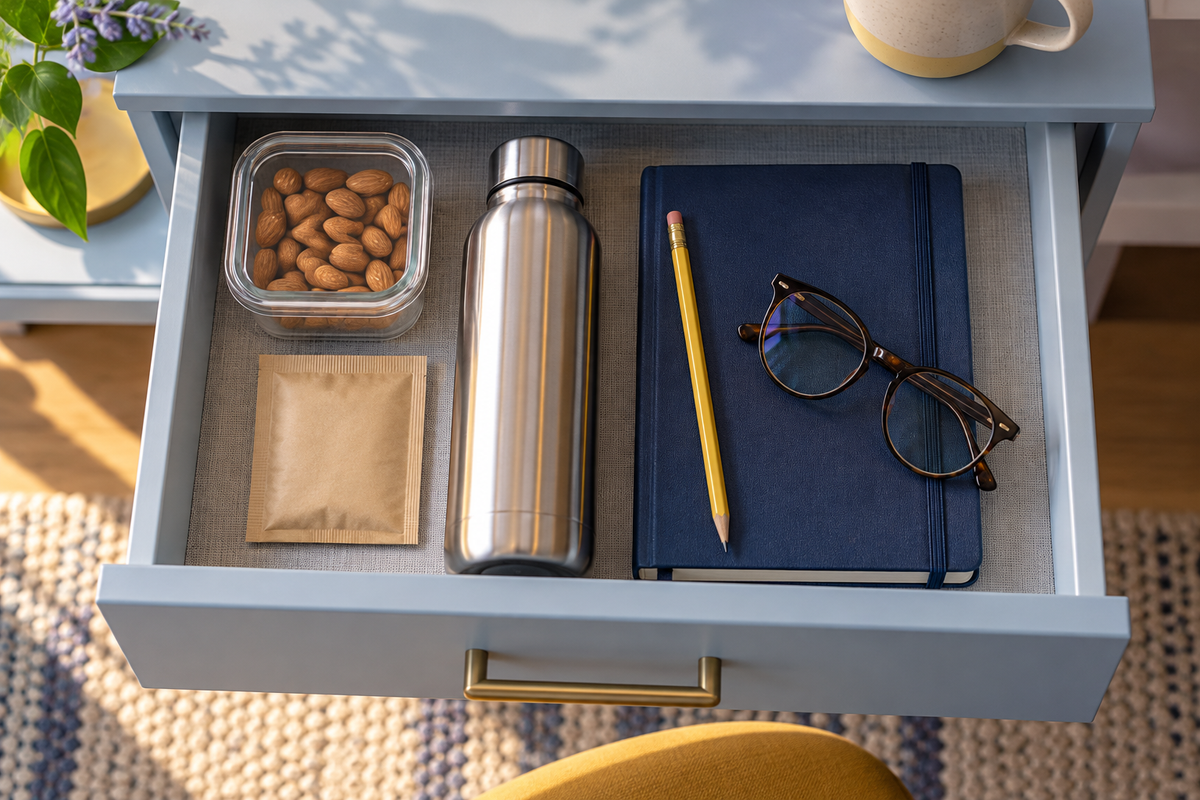
Keep your setup simple. One food option for hunger, one hydration option, and one portable energy or focus option is usually enough. If you pack six different caffeinated products into a drawer, you have not built a system. You have built a tiny convenience store with worse lighting.
It also helps to set personal guardrails before the afternoon gets busy. Know roughly when you stop using caffeine so sleep does not take the hit later. If you are sensitive to caffeine, take medications, are pregnant or nursing, or have a health condition, talk with a qualified healthcare professional about what is appropriate for you.
Refresh the drawer once a month. Check dates, toss anything crushed or melted, and replace the items you used. The best setup is the one that is there when the day gets sideways - not the one you forgot in a tote bag three months ago.
A drawer stocked with intention will not fix a brutal schedule. But it can keep a long day from winning the small battles. When the next low-energy stretch shows up, you will have a few sensible options ready to go. Dialed In. On Demand.


