
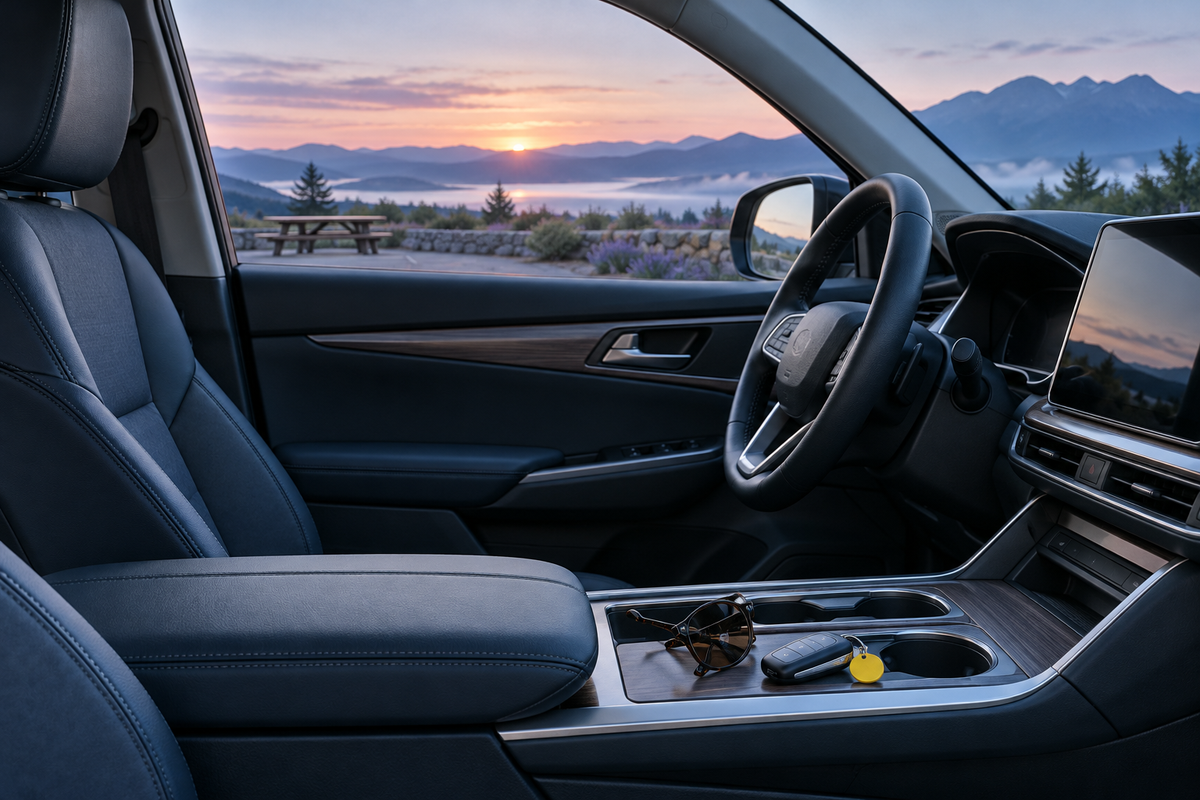
That travel mug is doing a lot on the morning commute: spilling on turns, cooling off too fast, and taking up the cup holder you needed for actual water. Hands free energy for driving is less about finding a miracle fix and more about making the drive easier to manage when your day starts before you feel fully online.
For adults moving between school drop-off, a job site, client calls, shifts, airports, practices, and whatever else got added to the calendar, portable energy can be useful. The key word is portable. A format that fits in a pocket or console can make more sense than another drink to balance, especially when the road is long and the schedule is not getting any kinder.
But keep the priority straight: no pouch or piece of gum makes drowsy driving safe. If you are fighting sleep, your best move is to pull over somewhere safe, rest, switch drivers, or change the plan. Energy can support an alert routine. It cannot replace sleep, common sense, or a real break.
What hands free energy for driving really means
“Hands free” should not mean opening products, checking labels, digging through a bag, or dealing with wrappers while the car is moving. That is just distracted driving with better branding.
It means getting set before you leave. Put water where you can reach it. Cue up directions and music before shifting into drive. If you plan to use a portable energy or focus format, choose it and store it within reach while parked. Once you are on the road, your hands belong on the wheel and your attention belongs outside the windshield.
There is also a practical comfort factor. Coffee works for plenty of people, and there is no reason to pretend otherwise. But it can be inconvenient in a moving vehicle, hard to finish before it goes cold, and not always welcome when you are headed into a meeting, a workout, or a long stretch without a bathroom break. Portable formats give you another option when the cup is not the move.
Pouches and gum solve different driving-day problems
Rivox makes nicotine-free Focus Pouches and Energy + Focus Gum for adults who want convenient energy and focus during demanding days. Both formats are built for portability, but they feel different in use. Choosing between them comes down to what kind of drive you have, what you prefer, and when you want support.
Focus Pouches: low-profile and nicotine-free
Focus Pouches are for adults who like the familiar pouch format but do not want nicotine. The format is discreet and does not require a drink, a shaker bottle, or a stop at a gas station where every energy drink seems engineered to be fluorescent.
For a drive, a pouch can make sense when you want something low-profile and do not want to chew. It may fit an early commute, a quiet carpool, or the stretch between a workout and a workday when you are trying to get yourself dialed in without adding another task.
Nicotine-free is the clear distinction here. That matters for adults who enjoy pouch convenience but are specifically looking for an option without nicotine. It does not mean the product is for everyone, and it does not turn a tired driver into a rested one. Use it as directed and take a moment to review the package for the current ingredient and nutrition information before you head out.
Energy + Focus Gum: a more active format
Energy + Focus Gum is the better fit when chewing sounds appealing. Gum gives you a familiar, active format that can work well for a long afternoon drive, a post-lunch slump, or the last leg home after a day that somehow became three days’ worth of meetings.
The trade-off is simple: gum asks a little more of you because you chew it. Some people like that. Others would rather set a pouch and focus on the road. Neither format wins universally. A person who likes gum on a solo highway run may prefer a pouch during a packed commute or when they are talking with passengers.
Flavor is part of that decision, too. A flavor you enjoy is easier to use consistently than one you merely tolerate. Check the current product label and product details for available flavors, the full ingredient list, and the labeled caffeine amount where applicable. Formulas and options can change, so the package in your hand is the right source for the specifics.
Build the routine before the wheels move
A useful driving routine starts before the car does. If an early start is normal for you, prepare the night before. Keep your preferred format in a bag, jacket pocket, or console storage - not loose under the seat, where it will vanish into the same dimension as charging cables and parking receipts.
Before leaving, eat if you need to eat, hydrate, and decide whether this is a day for coffee, gum, a pouch, or none of the above. Stacking every possible source of energy because the morning feels rude is not a strategy. Be aware of your total caffeine intake from coffee, tea, soda, pre-workout, gum, and other sources. Follow each product’s label, and consider your own sensitivity.
If you are prone to jitters, get anxious with caffeine, are pregnant or nursing, take medications, or have a health condition, a conversation with a qualified healthcare professional is wiser than trying to outsmart your physiology in a parking lot. Performance is personal. So is tolerance.
The road test: when portable energy helps and when it does not
Portable energy earns its place when it removes friction. Think of the contractor heading to an early job, the nurse driving home after an irregular shift, the parent running a packed afternoon, or the traveler trying to stay clear-headed through a rental-car maze. In these moments, a pocket-ready format can be more practical than detouring for a drink.
It is less useful when the real issue is exhaustion. Warning signs matter: repeated yawning, heavy eyelids, missing exits, drifting in your lane, not remembering the last few miles, or feeling like the road is oddly hypnotic. Do not negotiate with those signals. Pull over safely. Caffeine may take time to have an effect, and even then, it is not a substitute for sleep.
Long drives also benefit from boring, effective habits. Plan stops before you are wrecked. Drink water. Eat real food when you can. Keep the cabin comfortable rather than overly warm. Share driving if another qualified driver is available. A five-minute walk at a safe stop can do more for your alertness than white-knuckling another hour.
A sharper routine, not a louder one
The best option is the one that fits your day without creating another problem. If you want a nicotine-free, low-profile format, Focus Pouches may be the better match. If chewing helps you stay engaged and you prefer a familiar gum format, Energy + Focus Gum may fit better. Keep both decisions rooted in the label, your tolerance, and the kind of drive ahead.
Dialed In. On Demand. is useful only if it stays grounded in reality: prepare before you move, keep your attention on driving, and treat rest as the non-negotiable part of the plan. The goal is not to power through every warning light. It is to arrive alert enough to handle what is waiting when you park.


