
The 3 p.m. crash rarely asks permission. One minute you are answering a normal email. The next, you have read the same sentence four times and briefly considered moving to a cabin with no Wi-Fi. That is why people are looking at theobromine for sustained energy - not as a miracle fix, but as a potentially smoother way to stay useful when the day still has miles on it.
Theobromine is best known as one of the naturally occurring compounds in cacao. It is related to caffeine, but it does not behave exactly the same way. For adults who want energy without feeling like their nervous system just got put in a group chat, that distinction is worth understanding.
What is theobromine?
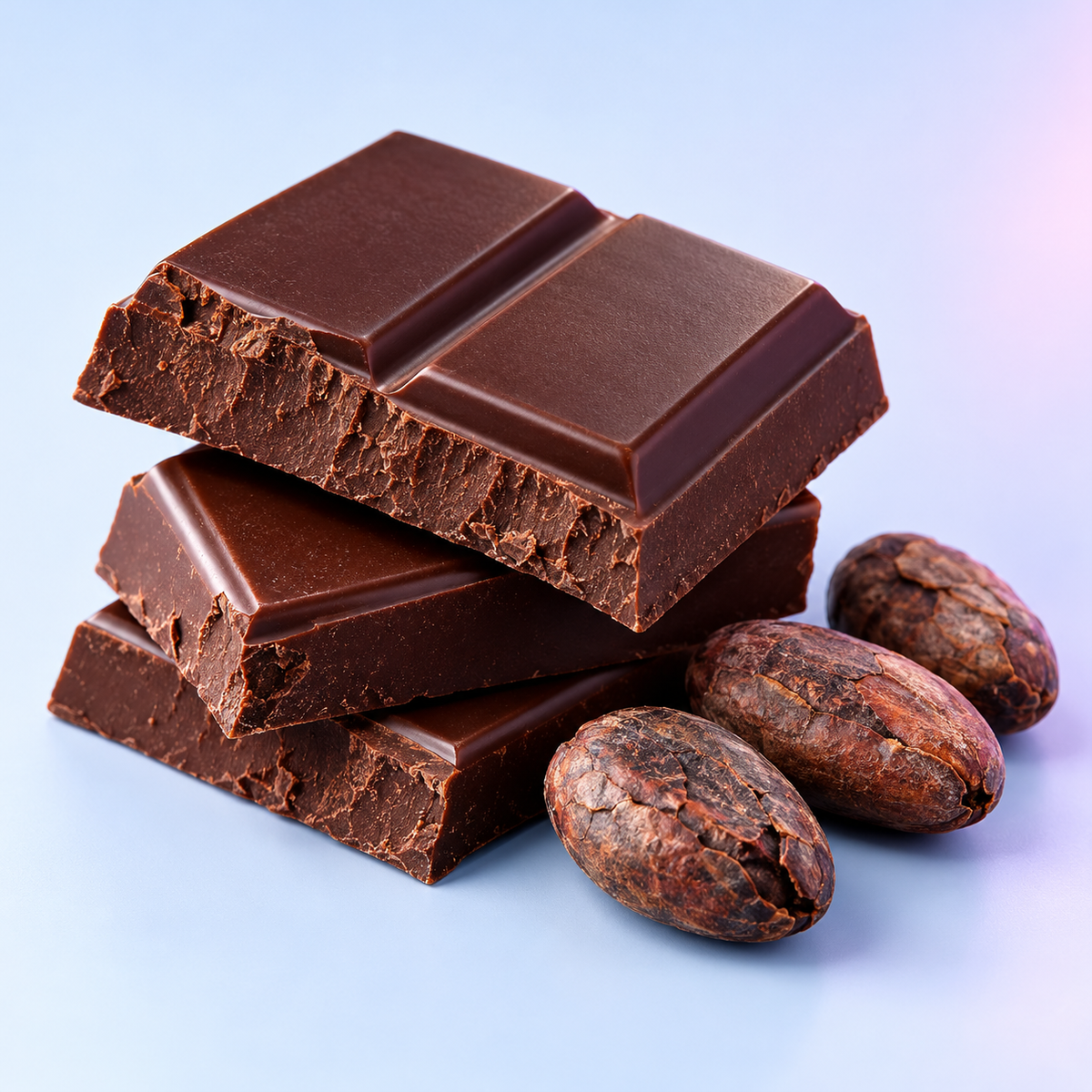
Theobromine is a methylxanthine, a family of compounds that includes caffeine. Cacao beans contain both, although theobromine is often present in larger amounts. It contributes to the character of cocoa and dark chocolate, along with that mild, satisfying lift some people notice after eating them.
Its name comes from Theobroma cacao, the scientific name for the cacao tree. Despite sounding like it belongs in a chemistry final, the practical point is simple: theobromine has stimulant-like effects, but it is generally considered less intense on the central nervous system than caffeine.
That does not mean it is caffeine with the volume turned down for everyone. Individual response still matters. Your usual caffeine intake, body size, sleep, medications, and whether you have eaten can all change how any stimulant feels.
Why theobromine can feel steadier
Caffeine works quickly for many people. That can be useful before an early meeting, a long drive, or a workout that starts before your brain has fully clocked in. The trade-off is familiar: a fast lift can sometimes come with jitters, a noticeable drop later, or a bedtime that gets pushed farther down the road.
Theobromine tends to have a gentler reputation because its effects often come on less aggressively and can linger for several hours. It interacts with some of the same pathways as caffeine, including adenosine signaling, but it is less potent as a central nervous system stimulant. In plain English, it may feel more like a gradual nudge than a light switch.
That is the appeal of theobromine for sustained energy. Some people are not chasing a dramatic burst. They want to stay present through the client call, school pickup, late shift, training session, or airport delay without feeling wound too tight.
Still, “sustained” does not automatically mean “better.” If you need to be sharply alert in 20 minutes, caffeine may be more predictable. If sleep is already fragile, anything stimulating later in the day deserves a little skepticism, even if it feels smoother at first.
The chocolate bar problem
Dark chocolate does contain theobromine, but using chocolate as a precision energy tool is messy. The amount of theobromine varies based on the cacao content, bean source, processing, and serving size. It also brings sugar, fat, and calories that may or may not fit what you need at that moment.
There is nothing wrong with enjoying dark chocolate. It can be a solid snack, especially paired with something more filling. But it is not the same as knowing exactly what you are taking and when it will fit into your day.
That matters on demanding schedules. The difference between a planned energy choice and rummaging through a desk drawer for something sweet is usually about convenience, not character. Nobody needs a lecture at 4 p.m. They need an option that makes sense.
When theobromine may fit your routine
Theobromine is most interesting when the goal is a measured lift rather than an all-out jolt. It may suit someone who already finds high-caffeine drinks too intense, wants a longer-feeling runway, or is experimenting with ways to avoid stacking cup after cup of coffee.
A few real-world situations make the case clearer:
- You have a long afternoon of focused work and want to avoid the shaky feeling that can follow a strong energy drink.
- You are traveling and need to stay switched on without adding another oversized coffee to an already unpredictable schedule.
- You train after work but do not want a late caffeine dose to sabotage sleep.
- You are cutting back on caffeine and want to pay attention to how a different stimulant profile feels.
Theobromine and caffeine are not enemies
The conversation does not have to be theobromine versus caffeine. Many people encounter them together naturally in cacao, and some energy formulas pair them on purpose. The theory is straightforward: caffeine can provide a more noticeable start, while theobromine may contribute to a less abrupt overall feel.
But combined stimulants are also where common sense matters most. If a product includes caffeine, the labeled caffeine amount is the number to pay attention to first. Do not assume theobromine cancels out caffeine’s effects, makes a high-caffeine dose gentle, or gives you a free pass to double up.
If you use coffee, tea, gum, pouches, pre-workout, or other energy products, count the total. A portable format can be genuinely useful on a packed day. It can also make it very easy to forget what you have already had. Your calendar may be chaotic. Your stimulant intake does not have to be.
Pouches, gum, and the convenience factor
For adults with full schedules, format matters almost as much as ingredients. A drink can be great when you have time to make one, carry one, and find a bathroom later. Not every day has that kind of hospitality.
Energy gum is built for a quick, familiar routine. You chew it, it is discreet, and it can fit between meetings, during a commute, or while walking into the gym. Pouches are also compact and hands-free, which can appeal to adults who want a nicotine-free pouch option without adding another beverage to the day.
Neither format is automatically better. Gum makes sense when you want something active and familiar. A pouch can make sense when you want to keep your hands free and avoid chewing through a presentation. The useful choice is the one you will use as directed, at a time that does not wreck the rest of your day.
Before trying any energy product, check the full ingredient panel and the labeled caffeine amount when caffeine is included. Flavor matters too, but it should not be the only thing doing the decision-making. A great flavor is nice. Knowing what is in your pocket is better.
A few smart guardrails
Theobromine is not risk-free just because it comes from cacao. Higher amounts may cause unwanted effects such as restlessness, headache, nausea, digestive discomfort, or trouble sleeping. People respond differently, and the line between “steady” and “too much” can be lower than expected when other stimulants are already in the picture.
Start conservatively when trying a new product or ingredient. Avoid treating it as an answer to a bad night of sleep. Be especially careful with late-day use if you are sensitive to stimulants, and talk with a qualified healthcare professional before using stimulant products if you are pregnant, nursing, managing a medical condition, or taking medications that could interact.
The goal is not to turn every tired moment into a chemistry project. It is to build a repeatable routine that helps you show up ready when the day gets demanding.
Keep the target realistic
The best use of theobromine is probably not chasing superhero energy. It is giving yourself a chance to stay clear-headed when the workday runs long and there is still dinner, a flight, a workout, or real life waiting afterward.
Pay attention to timing, total stimulant intake, and how you sleep that night. If a smoother, more measured lift helps you stay dialed in without making the evening harder, that is useful data. If it does not, skip the hype and adjust. Your schedule is demanding enough without pretending every energy strategy works the same for everyone.


