
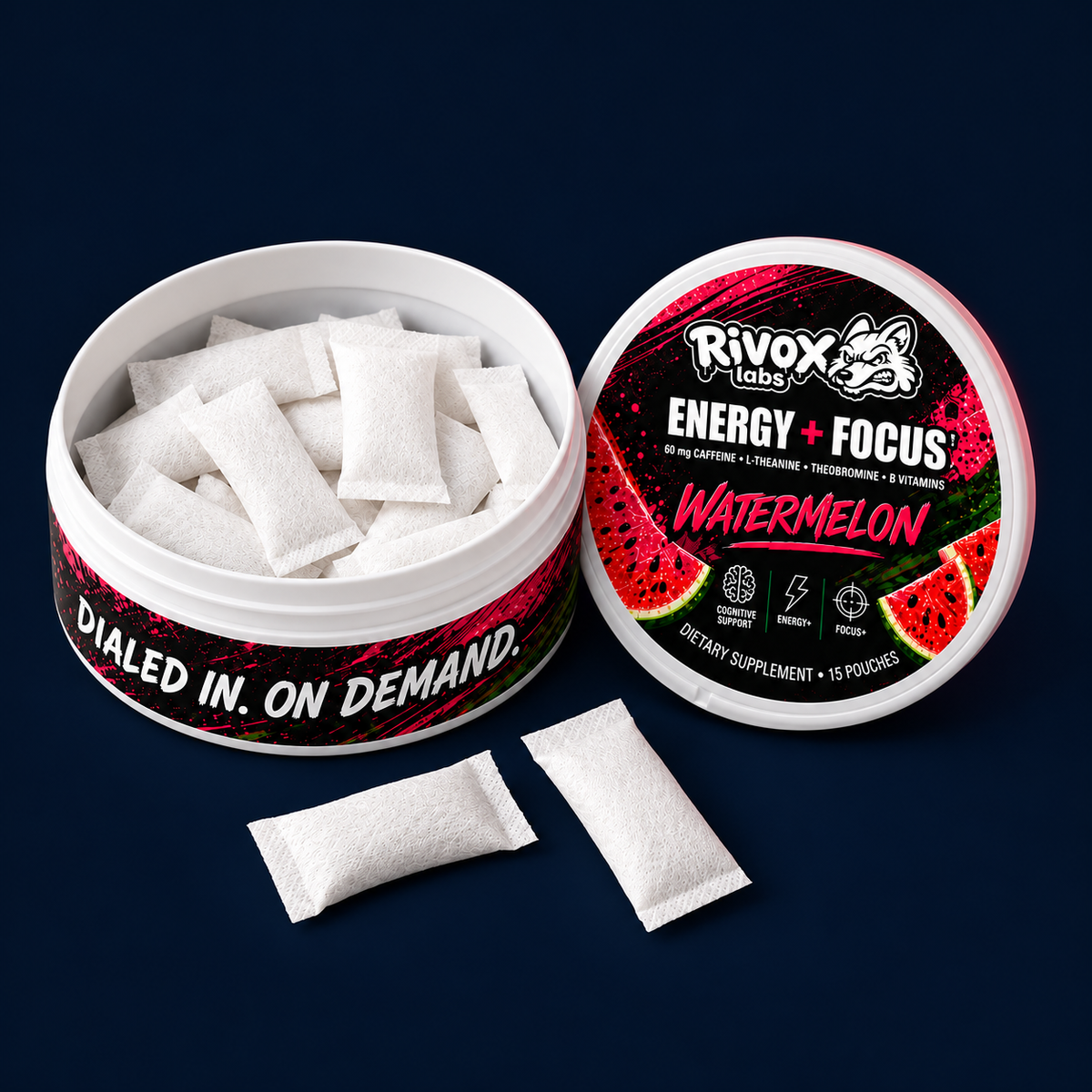
Your coffee is back at home. The airport line is barely moving. Your 2 p.m. meeting has somehow become three meetings stacked in a trench coat. That is the practical case for understanding how caffeine pouches work: they put a measured caffeine option in a pocket-sized format, without needing hot water, a can opener, or a free hand.
A caffeine pouch is not magic, and it is not a replacement for sleep. It is simply another way for adults to use caffeine when the usual routines are inconvenient. The format matters because demanding days rarely ask permission before getting demanding.
What is a caffeine pouch?
A caffeine pouch is a small, pre-portioned pouch placed between the gum and lip. It typically contains caffeine along with flavoring and other ingredients that support the pouch's texture and taste. Unlike a drink, there is no mixing, sipping, or carrying a bottle around. Unlike a tablet, there is no swallowing required at the start.
The pouch sits in place while its contents interact with saliva. Depending on the formulation, caffeine can be absorbed through the tissues in the mouth and can also be swallowed with saliva and absorbed through the digestive system. That two-part process is why the experience can vary somewhat from person to person.
For adults who already use caffeine, the appeal is mostly straightforward: portable energy that does not require a coffee run at the exact moment the schedule falls apart.
How caffeine pouches work in the mouth
Once a pouch is tucked between the upper lip and gum, saliva begins to moisten it. The pouch is designed to release its ingredients gradually while it is in place. Caffeine dissolved in saliva may be absorbed through the lining of the mouth, while some travels through the digestive tract after swallowing.
This is different from drinking coffee, where caffeine moves through the stomach and small intestine before entering the bloodstream. It is also different from a caffeine gum, which is actively chewed. With a pouch, there is no chewing and no need to keep taking it out to talk, type, drive, or get through security without creating a tiny desktop mess.
How quickly a person notices caffeine from a pouch depends on several things: the caffeine amount listed on the label, the product's formula, how long it is used, whether the person has eaten, and their usual caffeine intake. People who drink several coffees a day may experience a labeled amount differently than someone who usually avoids caffeine after breakfast.
The practical takeaway is simple. Read the label, know your own tolerance, and give a new format some room before deciding whether it fits your routine.
The pouch itself does not create the energy
The active ingredient is caffeine. It works by blocking adenosine, a chemical involved in the body's sense of sleep pressure. When adenosine's signal is partially blocked, people may feel more alert or less sleepy for a period of time.
That does not mean caffeine creates energy out of thin air. If you are running on four hours of sleep, a pouch may help you stay more alert temporarily, but it cannot do the work of recovery. Think of it as a tool for a full day, not a loophole around being human.
Caffeine pouches versus coffee, energy drinks, and gum
The best format depends less on trends and more on the situation in front of you.
Coffee works well when you want a warm drink, have time to enjoy it, and do not mind a cup in hand. It also brings volume, which can be a plus on a slow morning and a nuisance when you are packed into a car, plane, job site, or back-to-back day.
Energy drinks offer a familiar ready-to-drink option, but they can be bulky and often come with more liquid than you need right before a long drive or presentation. They may also include ingredients beyond caffeine, so the label matters if you prefer to keep things simple.
Caffeine gum is active by design. You chew it, which releases flavor and ingredients as you go. That can suit people who like the ritual of chewing or want a more hands-on format. Pouches are more passive: place one, leave it alone, and keep moving.
Rivox Labs offers nicotine-free Focus Pouches and Energy + Focus Gum for adults who want those two format choices. The difference is not just packaging. A pouch sits discreetly between the gum and lip, while gum is chewed. Flavor, ingredient panels, and labeled caffeine amounts should guide the choice, especially if you are comparing products or figuring out what works best during a particular part of the day.
Why nicotine-free matters to some pouch users
Pouches are often associated with nicotine, so it is worth being clear: caffeine pouches can be nicotine-free. For adults who like the convenience and discreet feel of an oral pouch but do not want nicotine, that distinction is the whole point.
Nicotine and caffeine are not interchangeable ingredients. They have different effects, different considerations, and different reasons people choose or avoid them. A nicotine-free caffeine pouch is for someone looking for a caffeine format, not a nicotine product in disguise.
That makes the format relevant to more than one kind of customer. Maybe you have never used pouches before and just want something more convenient than another drink. Maybe you have used pouch formats but prefer to leave nicotine out. Either way, the label should make the product's contents clear.
Using caffeine pouches with a little common sense
Caffeine is familiar, but familiar does not mean consequence-free. A pouch makes caffeine easier to carry, which also makes it easier to lose track of how much you have had across coffee, tea, soda, pre-workout, gum, and pouches. The total is what counts.
Start with the labeled serving guidance, particularly with a new product or if you are sensitive to caffeine. Avoid treating a rough afternoon as a reason to stack every caffeine source within reach. Late-day use can also interfere with sleep, which is an expensive way to solve a Tuesday problem and create a Wednesday one.
Adults who are pregnant or breastfeeding, have a medical condition, take medications, or have been advised to limit caffeine should talk with a qualified healthcare professional before using caffeinated products. Caffeine products should be kept away from children and pets.
Pay attention to how your body responds. Jitters, a racing feeling, upset stomach, headache, or trouble sleeping are signals to reduce caffeine or stop using it. The right caffeine routine is not the most aggressive one. It is the one that helps you stay on task without making the rest of the day worse.
When a pouch makes the most sense
Caffeine pouches earn their place in the inconvenient gaps: before an early flight, during a long drive with planned breaks, between calls, on a crowded commute, or halfway through a shift when leaving for a drink is not realistic. They can also work for people who do not want the extra liquid or sugar that may come with some energy drinks.
They are less useful when what you actually need is food, water, a break, or sleep. A caffeine pouch cannot fix a skipped lunch, and it should not be used to push through dangerous fatigue. If you are too tired to drive or operate equipment safely, the smart move is to stop and rest, not negotiate with biology.
A better way to choose your caffeine format
Before trying any caffeine pouch, look at the full label rather than just the front of the package. Check the caffeine amount per pouch or serving, the recommended use, the ingredient list, and any warnings. If flavor is a deciding factor, remember that a pouch stays close to your gum for a while, so choose one you can actually live with. This is not the time for bravery.
Then consider the moment you want it for. Need something you can use quietly during a meeting or while traveling? A pouch may be the better fit. Want the sensory reset of chewing? Gum may make more sense. Want a warm pause before the day starts? Coffee still has a job.
The point is not to replace every caffeine habit. It is to have a format that keeps you Dialed In. On Demand. when the day does not leave room for your usual one. Use it with intention, keep an eye on your total caffeine, and save yourself the trouble of making a 4 p.m. decision with a 4 p.m. brain.


