
The 3 p.m. slide is real. You still have a meeting, a school pickup, a drive home, or a training session that looked like a good idea at 6 a.m. That is where nicotine free pouches vs nicotine pouches becomes a practical question, not a philosophical one. Both fit in a pocket. Both can be used without smoke, vapor, or a coffee run. But what is in them - and what that means for your routine - is very different.
A nicotine pouch is built around nicotine. A nicotine-free pouch is not. That sounds obvious, but the label matters because nicotine-free can mean different things depending on the product: some are primarily about flavor and oral stimulation, while others include caffeine or other ingredients intended to support energy and focus.
Nicotine Free Pouches vs Nicotine Pouches: The Real Difference
Nicotine pouches are oral pouches placed between the lip and gum. They typically contain nicotine, flavoring, sweeteners, and pouch material. They do not require lighting up, charging a device, or stepping outside. For adults who already use nicotine, that discretion is part of the appeal.
The central trade-off is simple: nicotine is an addictive substance. It can create dependence, and stopping can bring cravings and withdrawal symptoms. A pouch may be smoke-free, but it is not consequence-free. People who do not currently use nicotine should not treat a nicotine pouch as a casual productivity accessory.
Nicotine-free pouches use the same general format without nicotine. Depending on the product, they may contain caffeine, flavoring, sweeteners, plant-derived ingredients, or other functional ingredients. The effect is tied to the formula, not the pouch itself. A mint pouch with no active ingredients and a caffeine pouch with no nicotine may look similar in the tin, but they are designed for different jobs.
For an adult who wants a compact boost without introducing nicotine, that distinction is the whole ballgame.
What Nicotine Feels Like - and Why That Matters
Nicotine affects the nervous system and can feel stimulating or calming to some users, especially those already accustomed to it. The experience varies with nicotine strength, personal tolerance, whether someone has eaten, and how often they use nicotine. What feels ordinary to one regular user can feel unpleasantly intense to someone new.
Common drawbacks can include nausea, hiccups, dizziness, a racing heartbeat, or gum irritation. Higher-strength products and empty-stomach use can make those effects more likely. Nicotine can also interfere with sleep, which is a poor return on investment when tomorrow is already stacked.
There is another practical issue: tolerance. When nicotine becomes part of a daily rhythm, the “boost” can become harder to separate from relief of a nicotine craving. That does not mean every nicotine pouch user has the same experience. It does mean the decision should be made with clear eyes, not because a tin happens to be next to the register.
If you use nicotine and want to reduce or quit, a healthcare professional can help you evaluate evidence-based options. A random swap is not automatically a quit plan.
What a Nicotine-Free Focus Pouch Is For
A nicotine-free functional pouch can make more sense when the goal is energy and attention rather than nicotine itself. Caffeine is familiar territory for many adults, but the delivery format changes the moment. There is no cup to carry, no can to finish before it gets warm in the console, and no need to chew through an entire piece of gum during a call.
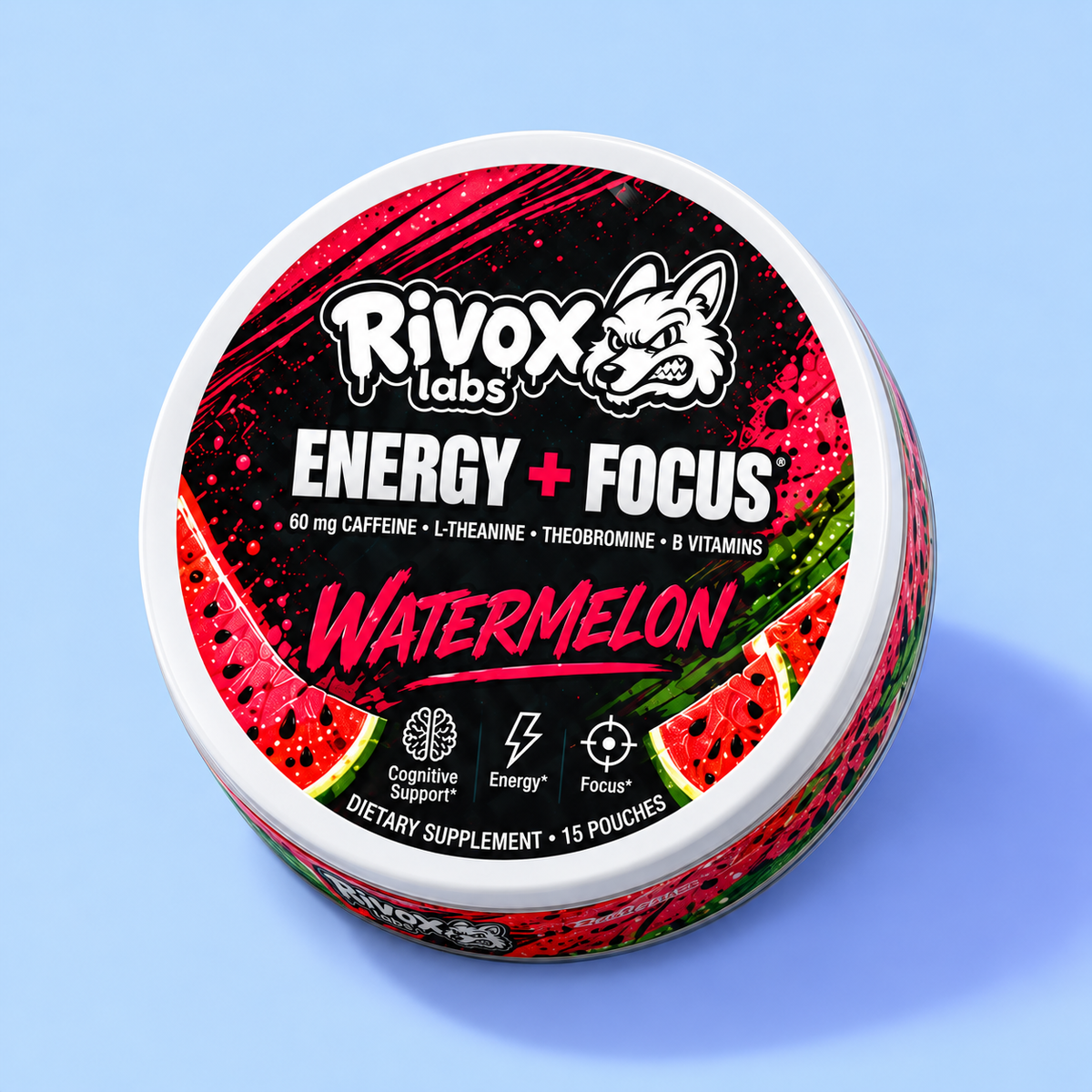
Rivox Labs Focus Pouches are nicotine-free and made for adults who want a portable option for demanding days. The format can fit the space between an early start and a late afternoon without making a desk, gym bag, or passenger seat look like a convenience-store countertop.
That said, caffeine is still caffeine. Check the product label for the amount per pouch and account for coffee, tea, energy drinks, pre-workout, and anything else already in your day. A pouch is easy to carry. That does not make stacking stimulants a brilliant plan.
People vary in caffeine sensitivity. If caffeine makes you jittery, anxious, or wide awake at midnight replaying a conversation from 2017, start cautiously or choose a non-caffeinated nicotine-free option. Adults who are pregnant or nursing, have a medical condition, take medications, or have questions about caffeine intake should consult a qualified healthcare professional.
Ingredients and Flavor: Read Past the Front Label
The front of a pouch tin usually tells you the big story: nicotine or no nicotine, flavor, and sometimes a stated strength or caffeine amount. The ingredient panel tells the rest.
With nicotine pouches, look for the nicotine content and understand whether it is listed per pouch. With functional nicotine-free pouches, look for caffeine per pouch, the full ingredient list, allergens if applicable, and serving directions. Do not assume “nicotine-free” means stimulant-free, sugar-free, or suitable for every dietary need. It only confirms one thing: no nicotine.
Flavor also has more to do with usability than people admit. A flavor that tastes fine for thirty seconds can become a distraction halfway through a long drive. Mint and fruit profiles often feel different in intensity and aftertaste, and sweetener preferences are personal. There is no universal winner here. The pouch you can use comfortably and responsibly is better than the one with the loudest label.
Pouches vs Gum: Similar Goal, Different Routine
Pouches and gum can both offer a portable alternative to another drink or snack, but they behave differently during a busy day.
A pouch sits in place, leaving your hands free. That can work well during a commute, at a keyboard, in a meeting, or while handling the thousand small tasks that somehow appear before noon. Some people prefer that low-profile format; others may find the sensation unfamiliar at first. Gum requires active chewing, which can feel more natural if you already chew gum, but it is less subtle when you are on a video call trying to look like you have definitely read the agenda.
Rivox Energy + Focus Gum is another nicotine-free format for adults who prefer a chewable option. Choosing between gum and pouches is less about which format is objectively better and more about where you will use it. Need hands-free and discreet? A pouch may fit. Want the familiar ritual of chewing? Gum may be the better call.
Neither format replaces sleep, food, hydration, or a real break. That is not a glamorous answer. It is also the answer that tends to hold up after a few weeks.
Which Option Fits Your Situation?
If you already use nicotine, nicotine pouches are a nicotine product and should be treated that way. Consider the strength, your existing use, whether you are trying to cut back, and whether the timing will interfere with sleep. They are not a risk-free focus tool.
If you do not use nicotine and want support for a long day, nicotine-free pouches offer a more logical starting point. You avoid beginning a nicotine habit while still getting the convenience of an oral pouch. If the pouch includes caffeine, treat it like any other caffeine source: know the dose, pace your intake, and pay attention to how you feel.
If your main need is something to do during a drive, a work block, or a post-lunch slump, a non-functional nicotine-free pouch may be enough. Sometimes the fix is not more stimulation. Sometimes it is a cold drink, five minutes outside, or an actual lunch. Annoying, but true.
Use the Label, Not the Hype
The best choice is the one that matches your goal without creating a new problem. Nicotine pouches may suit adults who knowingly choose to use nicotine. Nicotine-free pouches may better suit adults who want the format without nicotine, whether they are looking for flavor, oral satisfaction, or a clearly labeled caffeine option.
Before tossing a tin into your work bag, read the serving instructions, ingredients, and active amounts. Keep all pouches and gum out of reach of children and pets. Then build the option around your day - not around a promise that one little pouch can rescue a week of bad sleep.
A demanding schedule does not need more drama. Pick the format that helps you stay dialed in, use it thoughtfully, and leave enough room in the day for the basics that still do the heavy lifting.


