
Articles and Education
Can You Increase Testosterone Naturally? What Actually Works According to Research
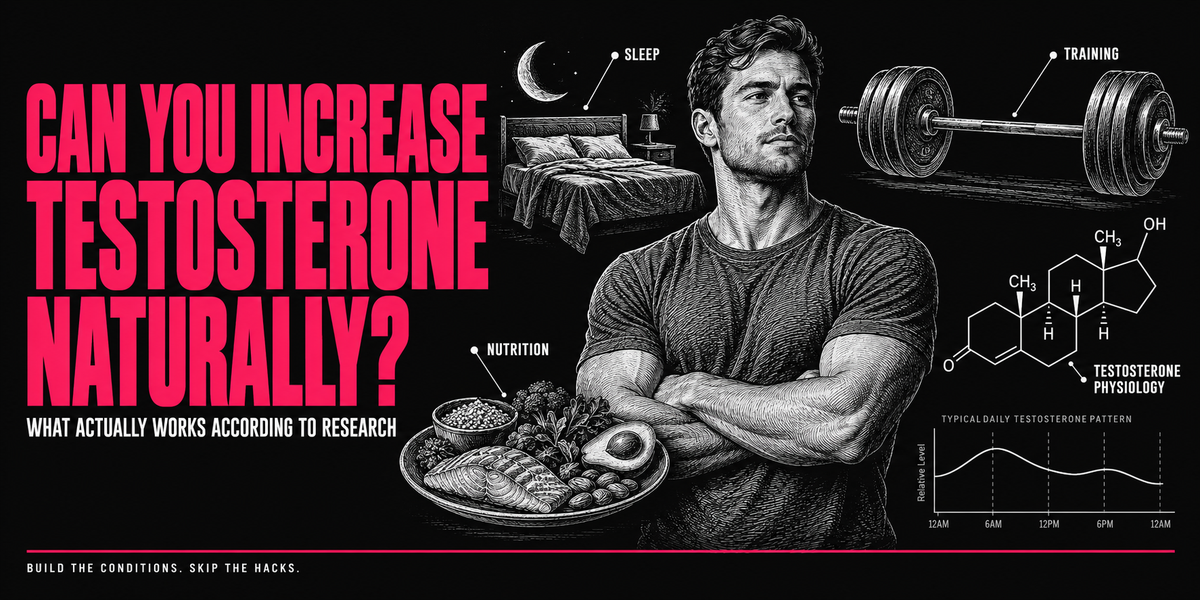

Search for ways to increase testosterone naturally and you will find no shortage of certainty.
Lift heavy. Eat more steak. Take a cold shower. Avoid ejaculation. Sleep exactly eight hours. Add a list of herbs and minerals. The advice changes, but the promise is usually the same: follow the right routine and your testosterone will climb.
The human evidence tells a more useful story.
Healthy men with testosterone already within a normal physiological range generally cannot produce a large, reliable, sustained increase through one food, exercise, supplement, or “hack.” The clearest improvements tend to occur when something identifiable is suppressing normal physiology—such as substantial obesity, prolonged underfueling, severe sleep disruption, certain medications, or exogenous androgen use.
In other words, the most realistic opportunity is often to remove a brake, not install a bigger engine.
The quick take
- Natural strategies are more likely to restore suppressed testosterone than elevate an already healthy baseline.
- Weight loss can meaningfully increase testosterone in men with obesity, while aggressive dieting can lower it in men who are already lean.
- Sleep supports normal physiology, but popular claims about exact percentage increases are stronger than the evidence.
- Resistance training improves muscle and strength even when resting testosterone does not increase.
- Correcting a nutrient deficiency is different from megadosing nutrients when status is already adequate.
- Some standardized botanical preparations have promising human data, but effects are preparation- and population-specific.
- Cold showers, semen retention, “testosterone foods,” and acute workout hormone spikes are not established methods for creating a higher baseline.
| Strategy | Best-supported context | What the evidence supports | Main limitation |
|---|---|---|---|
| Weight loss | Men with obesity-associated suppression | A potentially meaningful recovery, often proportional to weight loss | Not a reason for already-lean men to diet harder |
| Adequate energy | Lean, highly active, or aggressively dieting men | Recovery from energy-deficiency-related suppression | Energy availability is difficult to estimate precisely outside a lab |
| Sleep | Habitual restriction, disruption, or sleep disorder | Protection of normal endocrine function | No universal hours-to-testosterone formula |
| Resistance training | Nearly all adults who can train safely | Clear strength, muscle, function, and body-composition benefits | Does not reliably raise resting testosterone |
| Micronutrients | Documented deficiency or inadequate intake | Correction of a limiting nutritional factor | More is not better once adequacy is reached |
| Botanicals | Specific studied populations and standardized preparations | Promising, mixed, generally modest signals for some extracts | Small studies and poor equivalence between products |
First, define what “increase testosterone” means
A higher laboratory value can describe several different events.
Testosterone might recover after weight loss in a man with obesity-associated suppression. It might fall during an aggressive contest-preparation diet and return when energy intake and body weight recover. It might briefly rise after a heavy training session and return toward baseline within hours. Total testosterone might also change because SHBG—the protein carrying much of it in circulation—has changed.
Those are not equivalent outcomes. Neither are testosterone, libido, energy, muscle growth, erectile function, fertility, and mood. An intervention can improve one without meaningfully changing the others.

The physiology behind the number
Testosterone production is controlled through the hypothalamic-pituitary-gonadal axis. The hypothalamus releases gonadotropin-releasing hormone in pulses. That signal tells the pituitary to release luteinizing hormone, or LH, and follicle-stimulating hormone, or FSH. LH stimulates Leydig cells in the testes to produce testosterone, while FSH and high local testosterone concentrations help support sperm production.
The system also contains feedback loops. Testosterone and estradiol signal back to the hypothalamus and pituitary, helping regulate further output. Exogenous testosterone and anabolic-androgenic steroids can therefore suppress LH and FSH even while blood androgen concentrations are high. That is one reason an externally elevated testosterone value is not evidence that natural production is functioning well.
Once testosterone enters circulation, most is bound to proteins. Sex hormone-binding globulin, or SHBG, binds testosterone relatively tightly; albumin binds it more loosely; and only a small portion circulates unbound as free testosterone. Changes in SHBG can move total testosterone without producing an equivalent change in free testosterone. Obesity and insulin resistance often lower SHBG, while aging, hyperthyroidism, some liver conditions, and certain medications can raise it.
This is why a “testosterone increase” requires more interpretation than a before-and-after total value. Was the test drawn at the same time of day? Was the person fasting? Did body weight, SHBG, sleep, illness, medication, or calorie intake change? Was the increase confirmed? Did any symptom or functional outcome improve?
Professional guidance does not diagnose testosterone deficiency from one nonspecific symptom or one isolated result. It calls for compatible symptoms or signs plus consistently low testosterone measured under appropriate conditions. [15, 16]
Rivox takeaway
A higher total-testosterone result is not automatically better physiology. Ask what changed, why it changed, whether the result is sustained, and whether anything meaningful improved.
1. Address excess adiposity when it is actually present
Among natural approaches, weight loss in men with obesity has some of the clearest evidence for restoring testosterone.
A systematic review and meta-analysis of 24 studies found that low-calorie dieting increased total testosterone by approximately 2.87 nmol/L—about 83 ng/dL—while bariatric surgery, which generally produced substantially greater weight loss, increased it by approximately 8.73 nmol/L, or 252 ng/dL. Greater weight loss was associated with a larger hormonal response. [1]
That does not mean body fat is the only explanation or that every heavier man has testosterone deficiency. Obesity can influence SHBG, insulin sensitivity, inflammation, sleep apnea, and signaling through the hypothalamic-pituitary-testicular axis. The measured change may reflect several of these factors at once.
It also does not mean leaner is always better. Weight loss is a context-dependent strategy—not a universal testosterone prescription.
Why obesity can lower measured testosterone
Obesity affects more than one part of the system. Lower SHBG can reduce total testosterone even when free testosterone is less dramatically affected. With greater metabolic dysfunction, inflammatory signaling, insulin resistance, sleep apnea, increased conversion of androgens to estrogens in adipose tissue, and altered hypothalamic-pituitary signaling may contribute to a deeper suppression.
That creates an important clinical distinction. A man with mildly reduced total testosterone, low SHBG, and obesity may not have the same physiology as a man with testicular failure. Both deserve accurate interpretation, but they should not be treated as interchangeable problems.
How large is the likely effect?
The meta-analytic averages—approximately 83 ng/dL after diet-induced weight loss and 252 ng/dL after bariatric surgery—should not be treated as promises. Bariatric surgery represents a medical intervention producing far greater weight loss than ordinary lifestyle change. Studies also differed in baseline weight, age, health, testosterone assays, and follow-up.
Still, the dose-response pattern matters: men who lost more weight generally experienced larger testosterone increases. That is stronger evidence for restoration than the tiny and transient changes often marketed as “boosting.”
Rivox takeaway
For a man with obesity-associated suppression, sustainable fat loss may produce a meaningful recovery. For a man who is already lean, losing more weight is not an evidence-based testosterone strategy.
2. Avoid turning leanness into chronic underfueling
The direction can reverse in lean men undertaking prolonged or aggressive energy restriction.
Research involving bodybuilders, endurance athletes, military training, and men with energy-deficit hypogonadism shows that severe underfueling can suppress testosterone and reproductive signaling. Recovery may occur when energy intake, body weight, and training demand normalize.
The evidence does not establish a universal body-fat percentage, calorie deficit, or rate of weight loss at which testosterone suddenly declines. Internet claims that a particular percentage—often 10–15% body fat—is “optimal” are more precise than the science allows.
A more practical question is whether intake supports the work being asked of the body. Warning signs such as worsening performance, persistent fatigue, reduced libido, poor recovery, sleep disruption, or repeated injuries deserve attention, particularly when they appear during a prolonged cut.
Low energy availability is not simply “eating clean”
Energy availability describes the dietary energy remaining for normal physiological functions after accounting for exercise expenditure. A man can consume high-quality foods and still fail to provide enough total energy for training, thermoregulation, bone remodeling, immune function, and reproduction.
When energy becomes scarce, reproductive function is not the body’s immediate survival priority. LH pulsatility and testosterone production may decline. In athletes, this can sit alongside reduced performance, impaired bone health, mood changes, and increased injury risk. The International Olympic Committee places male reproductive function within the broader model of Relative Energy Deficiency in Sport.
The available male literature is less complete than the corresponding female-athlete literature. Many reports involve small samples, case series, extreme training, or contest preparation. That limits our ability to draw a single threshold for recreationally active men. It does not erase the physiological pattern: sustained energy deficiency can suppress the reproductive axis, and recovery often requires more energy, less demand, or both.
Why the same diet can move testosterone in opposite directions
Calorie restriction in a man with obesity may improve metabolic health and relieve obesity-associated suppression. The same deficit in an already-lean athlete can deepen energy deficiency and lower testosterone. The intervention is called “weight loss” in both cases, but the starting physiology is different.
Rivox takeaway
Do not use fat loss as a universal hormone intervention. Match calorie intake to body composition, training demand, health, and the direction your performance and recovery are moving.
3. Protect sleep without turning it into a hormone guarantee
Sleep matters. That does not make every viral sleep-and-testosterone statistic reliable.
The widely repeated claim that five hours of sleep reduces testosterone by 10–15% comes largely from a 2011 experiment involving only 10 healthy young men. After a period of five-hour sleep opportunities, daytime testosterone was lower. The result is biologically interesting, but the sample was tiny, the intervention was short, and it should not be converted into a universal percentage for every man. [2]
Later evidence is mixed. Severe or total sleep deprivation is more consistently associated with lower testosterone than brief partial restriction. Obstructive sleep apnea is also associated with lower testosterone, especially when severe, but meta-analyses have not shown a reliable average testosterone increase from CPAP.
Treating sleep apnea remains important even if a hormone value does not change. Better alertness, breathing, cardiovascular health, and daily function matter on their own.
Sleep timing matters to the test itself
Testosterone normally follows a daily rhythm, with higher concentrations occurring around the early part of the waking day. That rhythm is partly tied to sleep. For most men, guidelines recommend morning testing; for night-shift workers, sampling after an adequate main sleep period may be more informative than applying a conventional 8:00 a.m. rule to an inverted schedule.
A low value after a sleepless night, during acute illness, or under unusual testing conditions may not describe a man’s usual physiology. This is one reason an unexpectedly low value is repeated before diagnosis.
What sleep research can responsibly support
The science supports avoiding severe and sustained sleep loss. It does not yet tell us that increasing habitual sleep from six to eight hours will raise every man’s testosterone by a predictable amount. Sleep-extension trials with testosterone as a primary outcome remain limited.
That should not weaken the recommendation to sleep adequately. Sleep supports cognition, appetite regulation, training quality, mood, reaction time, and cardiovascular health. A behavior does not need to “boost testosterone” to deserve a place in a performance routine.
Rivox takeaway
Protect adequate, consistent sleep because it supports performance and normal physiology. Do not promise a precise testosterone increase from adding an hour to the night.
4. Train for adaptation—not a temporary hormone spike
Heavy compound exercises can produce a temporary increase in circulating testosterone after training. That is not the same as establishing a higher resting level.
Research has not supported the idea that larger acute post-workout testosterone responses reliably explain who gains more muscle or strength. Resistance training still works; it simply works through a much broader set of local and systemic adaptations than one temporary blood measurement. [3]

Choose resistance training because it improves strength, muscle, function, insulin sensitivity, and body composition. Those benefits do not become less valuable when resting testosterone stays similar.
High-volume endurance training is not automatically harmful, either. Problems are more likely when workload, recovery, and energy intake become mismatched. Training type cannot be interpreted separately from fueling and recovery.
Acute hormones versus local muscle signaling
Older training theories often emphasized the brief systemic rise in testosterone, growth hormone, and other hormones after high-volume resistance exercise. That led to programming choices intended to maximize the post-workout blood response.
But muscle adaptation depends heavily on mechanical tension, motor-unit recruitment, local molecular signaling, sufficient training volume, nutrition, and recovery. Studies comparing individual hormonal responses with subsequent hypertrophy have not shown that the men producing the largest temporary testosterone spikes necessarily build the most muscle. [3]
This matters because readers can mistake “exercise influences hormones” for “the exercise with the largest acute hormone spike is best.” Those are different claims. Squats and deadlifts are productive because they can efficiently train large amounts of muscle—not because they permanently reset the endocrine system.
Can too much exercise lower testosterone?
High training volume can coexist with low testosterone in endurance athletes, but volume alone is rarely the entire explanation. Low energy availability, low body mass, insufficient carbohydrate, psychological stress, inadequate recovery, and the timing of blood collection can overlap.
Overtraining syndrome is also more specific than feeling tired after a hard week. It involves a prolonged performance decline after other causes have been excluded. No single testosterone, cortisol, or testosterone-to-cortisol ratio diagnoses it.
Rivox takeaway
Lift to build muscle and strength. Condition to improve fitness. Judge the program by adaptation and recovery—not by the size of a temporary hormone spike.
5. Build an adequate diet—not a list of “testosterone foods”
Eggs, red meat, oysters, garlic, ginger, onions, pomegranate, avocado, cruciferous vegetables, honey, Brazil nuts, and olive oil have all appeared on testosterone-food lists.
Most claims rely on nutrient content, animal research, mechanistic speculation, or a particular extract rather than replicated trials showing that eating the food produces a sustained, clinically meaningful testosterone increase in adult men.
These foods do not need to raise testosterone to fit into a nutritious diet. The mistake is turning “contains zinc,” “contains cholesterol,” or “supports general health” into “clinically boosts testosterone.”
What about dietary fat?
A 2021 meta-analysis reported modestly lower total and free testosterone during lower-fat diets, but the analysis involved only six intervention studies and later received a corrigendum. The broader literature remains small and heterogeneous. It does not justify deliberately increasing saturated fat or cholesterol solely to chase a hormone number. [4, 5]
Energy sufficiency, adequate essential nutrients, metabolic health, and a dietary pattern you can sustain are more defensible priorities than treating one macronutrient as a testosterone switch.
Low-carbohydrate and ketogenic diets
Low-carbohydrate studies are difficult to summarize with a single hormone conclusion because carbohydrate, protein, calories, body weight, training status, and study duration change together. A systematic review found that moderate-protein low-carbohydrate diets were generally neutral for resting testosterone, while very-high-protein low-carbohydrate diets could lower it. The literature also contained substantial heterogeneity and an erratum. [17]
For an athlete performing high-intensity work, carbohydrate availability may influence training quality and perceived recovery even if resting testosterone does not change. The most useful dietary pattern is therefore not automatically the one producing the highest short-term hormone value; it is the one supporting health, body composition, performance, and adherence.
Plant-based versus omnivorous diets
Population analyses and short controlled comparisons have not established a meaningful testosterone advantage for either plant-based or omnivorous eating by itself. A well-planned pattern can meet nutritional needs in either form; a poorly planned pattern can fail in either form.
Diet labels conceal important differences. Total calories, protein quality, micronutrient status, fiber, fat type, body-weight trajectory, and food variety matter more than whether the diet is marketed as carnivore, vegan, Mediterranean, or ancestral.
Rivox takeaway
Eat enough, cover essential nutrients, choose a sustainable pattern, and support the work you perform. No single food or macronutrient ratio has earned the title of universal testosterone booster.
6. Correct deficiencies instead of megadosing nutrients
Nutrients are often most relevant when they are actually lacking.
Zinc: A classic study found large testosterone changes during experimentally restricted zinc intake and after zinc repletion in marginally deficient older men. Those intervention groups were extremely small, but the pattern supports correcting deficiency—not assuming extra zinc will raise testosterone in a zinc-replete man. Excessive long-term zinc intake can also impair copper status. [6]
Vitamin D: An early trial reported increased testosterone after vitamin D supplementation, but later randomized trials—including one in men with low testosterone—did not show a reliable androgen benefit. Correcting deficiency remains important for established health reasons; promising a testosterone increase is a separate and less certain claim. [7, 8]
Magnesium, selenium, boron, vitamin K, and B vitamins: Evidence varies, but none has strong support as a universal testosterone booster. Small positive studies should not outweigh null findings, inadequate replication, baseline nutrient status, or safety considerations.
| Nutrient | What the evidence suggests | What it does not establish |
|---|---|---|
| Zinc | Deficiency can suppress testosterone; repletion may restore it. | That zinc raises testosterone in men who already consume enough. |
| Vitamin D | Deficiency should be corrected for established health reasons. | A reliable testosterone increase across randomized trials. |
| Magnesium | Small studies provide preliminary signals in selected populations. | A replicated clinically meaningful increase in typical healthy men. |
| Selenium | May matter in deficiency or selected infertility settings. | A general testosterone benefit; excess intake can be harmful. |
| Boron | One tiny short study reported a free-testosterone change. | A durable or replicated testosterone or performance benefit. |
Nutrient status is not always obvious from diet recall alone, but indiscriminate laboratory panels and megadosing are not automatically helpful either. Testing should be driven by diet, symptoms, health history, medication, and clinical judgment. More of an essential nutrient is not necessarily better once physiological needs are met.
Rivox takeaway
Correct a real deficiency. Do not assume that the dose producing the highest intake produces the healthiest hormone profile.

7. Understand what supplement research can—and cannot—show
The evidence for testosterone-support supplements is not uniformly negative. It is also not interchangeable.
Ashwagandha: A 2026 meta-analysis of randomized trials reported a positive pooled testosterone signal in men. Individual studies vary in extract, dose, population, duration, and purpose, so the pooled result does not mean every ashwagandha product produces the same outcome. [9]
Tongkat ali: A systematic review and meta-analysis found a positive signal for total testosterone, particularly among men described as hypogonadal. The underlying trial base remains small and heterogeneous. [10]
Fenugreek: Standardized extracts have produced positive findings in some trials and equivocal results in others. A preparation-specific result should not be generalized to every fenugreek powder or extract. [11, 12]
Purified shilajit: One notable placebo-controlled trial found increased total and free testosterone after 90 days in healthy men using a purified preparation. Independent replication of the same preparation is limited. [13]
Other popular ingredients have weaker testosterone evidence. Tribulus may be studied for sexual-function outcomes without reliably increasing testosterone. D-aspartic acid has failed to increase testosterone or training outcomes in longer trials involving resistance-trained men. Maca may influence libido in some research without meaningfully raising testosterone. Fadogia agrestis lacks credible human clinical evidence and should not be treated as an established testosterone ingredient.
The standard is simple: match the exact preparation, dose, duration, population, and outcome. A botanical name on a label is not proof of equivalence with a clinical trial.
| Ingredient | Human evidence | Main limitation | Evidence category |
|---|---|---|---|
| Ashwagandha | Positive pooled testosterone signal across randomized trials; some stress, sexual-function, and training outcomes also studied. | Different extracts, populations, endpoints, and modest study durations. | Promising, limited |
| Tongkat ali | Meta-analysis suggests a total-testosterone effect, especially in men described as hypogonadal. | Small heterogeneous trial base and preparation differences. | Promising, limited |
| Fenugreek | Some standardized-extract trials report testosterone or sexual-function benefits; others are equivocal. | Extract-specific findings, variable endpoints, and industry relationships. | Mixed / preparation-specific |
| Purified shilajit | One placebo-controlled 90-day trial reported increased total and free testosterone. | Limited independent replication of the same purified preparation. | Promising, preliminary |
| Tribulus | Sexual-function outcomes have been studied; testosterone usually does not meaningfully increase. | Marketing commonly substitutes libido claims for testosterone evidence. | Weak for testosterone |
| D-aspartic acid | Longer resistance-trained trials are neutral or unfavorable for testosterone and performance. | Early findings did not translate reliably to trained men. | Not supported |
| Fadogia agrestis | No credible human clinical testosterone evidence established. | Predominantly preclinical claims and inadequate human safety data. | Unsupported |
Why formulation equivalence matters
Botanicals are chemically complex. Species, plant part, growing conditions, extraction solvent, standardization, storage, contaminants, and dose can all change the finished material. A trial of a standardized root extract does not automatically support an unstandardized powder, a different plant part, or a proprietary blend that does not disclose an equivalent dose.
The same caution applies to combining ingredients. If ingredient A increased testosterone in one study and ingredient B did so in another, that does not prove that A plus B will produce the sum of both changes. Interactions, dosing, population differences, and the absence of a trial on the finished formula prevent that arithmetic.
Hormone outcomes are not the only outcomes
A supplement could improve perceived stress or sexual well-being without a meaningful testosterone change. Another might change total testosterone without improving energy, strength, libido, or quality of life. A responsible interpretation reports both rather than assuming the hormone caused every observed benefit.
Rivox takeaway
Read supplement research at the level of the exact extract, dose, population, and outcome. Ingredient recognition is not evidence of product equivalence.
Popular testosterone hacks: what the evidence says
| Claim | Evidence-based verdict |
|---|---|
| Cold showers boost testosterone | No convincing evidence of a sustained increase. Alertness is not a testosterone measurement. |
| Seven days of abstinence creates a major spike | The widely cited 28-man paper was retracted and should not support this claim. [14] |
| Squats raise baseline testosterone | They may produce a temporary response, but no particular lift is established as a chronic testosterone intervention. |
| Red meat or eggs increase testosterone | Nutrient content and hormone synthesis do not establish a clinically meaningful food effect. |
| More dietary fat always means more testosterone | Evidence is limited and conflicting; excessive saturated fat is not justified as a hormone strategy. |
| Ten to fifteen percent body fat is optimal | No universal testosterone-optimal body-fat range has been established. |
| Red light on the testes raises testosterone | Evidence is predominantly preclinical; human efficacy and reproductive safety are not established. |
Remove meaningful suppressors before chasing optimizers
Heavy alcohol exposure, chronic opioid use, glucocorticoids, and anabolic-androgenic steroids can affect reproductive hormone function. Smoking may alter hormone measurements, but an apparently higher testosterone value in some smokers is not evidence of a benefit; tobacco remains harmful to vascular and reproductive health.
Medication-related suppression should be discussed with a clinician. Do not stop a prescribed medication or attempt to manage anabolic-steroid withdrawal with an internet protocol.
Stress deserves a similarly careful interpretation. Acute stress can influence hormone measurements, and chronic psychological strain can affect sleep, mood, libido, and recovery. Evidence that a stress-management technique creates a sustained testosterone increase is limited. It can still be worthwhile because well-being matters independently of testosterone.
Alcohol: dose and pattern matter
Chronic heavy alcohol exposure can disrupt testicular function, liver function, reproductive hormones, and sperm parameters. Acute studies can produce different short-term hormonal responses depending on dose and sampling time, so they should not be used to declare that one drink either raises or destroys testosterone.
The strongest practical conclusion concerns heavy and repeated exposure, not panic over a single social drink. Reducing heavy intake removes a plausible suppressive factor and improves health through pathways extending well beyond testosterone.
Nicotine and smoking: a higher number would not mean a benefit
Some observational studies report higher total testosterone among smokers, while others are inconsistent. Smoking can alter SHBG and is entangled with differences in body weight, alcohol, age, and health behavior. Even if a cohort shows a higher hormone value, that cannot transform tobacco exposure into a useful endocrine intervention.
Smoking damages vascular and reproductive health, and vascular function is central to erections. This is a useful example of why the highest testosterone number is not the same as the best health outcome.
Opioids, glucocorticoids, and anabolic steroids
Chronic opioids can suppress hypothalamic and pituitary signaling, producing clinically important androgen deficiency in some men. Glucocorticoids can also affect the reproductive axis. These are medication-management questions, not reasons to stop treatment without supervision.
Anabolic-androgenic steroids create a different problem. External androgens suppress LH and FSH, reducing endogenous testosterone production and sperm formation. Recovery after discontinuation varies with the compounds used, duration, cumulative exposure, age, and individual physiology. Testosterone may recover over months in many users, while sperm production can take longer and some men remain symptomatic. Internet “post-cycle therapy” practices are far more common than high-quality evidence supporting specific self-directed regimens.
Rivox takeaway
Removing a genuine suppressor can matter more than adding an optimizer. Medication effects and post-steroid suppression belong in a clinical conversation, not a supplement experiment.
Environmental exposures: association is not an intervention
Phthalates, bisphenols, PFAS, pesticides, and occupational chemicals have been studied in relation to reproductive hormones. Some human observational studies report associations with testosterone or semen parameters, and mechanistic research makes endocrine effects biologically plausible.
But observational exposure research is difficult. A single urine or blood sample may not represent long-term exposure. Chemicals occur in mixtures. Diet, occupation, body composition, socioeconomic conditions, and other behaviors can confound associations. Results can also differ by age, dose, and timing.
Most importantly, association does not prove that changing one household product will raise an individual man’s testosterone. Intervention trials demonstrating a measurable testosterone recovery after reducing a specific everyday exposure are scarce.
Reasonable exposure reduction can still be sensible—follow workplace protections, avoid heating food in damaged plastic, and follow public-health guidance—but it should not be marketed as a quantified testosterone treatment or “detox.”
Rivox takeaway
Environmental associations are worth studying, but the missing intervention step matters. Reducing exposure is not yet a proven method for producing a specific testosterone increase.
How to judge a testosterone claim
- Was the evidence human? A rodent or cell experiment can identify a hypothesis, but it cannot establish a benefit in adult men.
- Who was studied? Results in men with deficiency, obesity, infertility, or clinically low testosterone may not apply to healthy eugonadal men.
- What exactly was tested? Identify the food, nutrient, standardized extract, dose, and duration.
- What changed? Total testosterone, free testosterone, SHBG, libido, energy, and strength are different outcomes.
- How large was the change? Statistical significance does not establish that a person would notice a difference.
- Was it sustained? A 30-minute post-workout spike is not a new resting baseline.
- Was it replicated? One small positive trial should be treated as preliminary, especially when industry funded.
- What were the tradeoffs? A strategy that changes a hormone while harming cardiovascular, reproductive, or psychological health is not an upgrade.
Rivox takeaway
The question is never just “did testosterone go up?” The scientifically useful question is: in whom, compared with what, by how much, for how long, with which preparation, and with what real-world benefit?
When natural support is not enough: symptoms, testing, and diagnosis
Fatigue by itself does not diagnose low testosterone. Neither do reduced motivation, a difficult training block, poor sleep, low mood, or weight gain. All are common and nonspecific. They can arise from sleep apnea, anemia, thyroid disease, depression, medication effects, energy deficiency, chronic illness, alcohol use, or ordinary life stress.
Features that may increase clinical suspicion include persistently reduced sexual desire, fewer spontaneous or morning erections, erectile dysfunction, infertility, reduced testicular volume, gynecomastia, loss of body hair, unexplained anemia, low bone density, or a decline in muscle mass that is not otherwise explained. Even these findings require context; symptoms and laboratory evidence must agree.
Why one test is not enough
Testosterone varies within the same person. Time of day, sleep schedule, food intake, acute illness, calorie restriction, hard training, medication, and ordinary biological variation can influence a result. For men with conventional sleep schedules, guidelines generally begin with an early-morning total-testosterone measurement and require confirmation on a separate day when the first result is low. Testing during acute illness or immediately after a highly disruptive period can be misleading.
A laboratory reference interval is not the same as a diagnostic threshold, and thresholds differ among laboratories and professional groups. Interpretation also changes when SHBG is unusually high or low. In that setting, a clinician may consider free testosterone measured or calculated with an appropriate method rather than treating total testosterone as the whole story.
Primary versus secondary hypogonadism
When testosterone is repeatedly low, LH and FSH help localize the problem. High gonadotropins alongside low testosterone can suggest primary testicular dysfunction: the pituitary is sending a strong signal, but the testes are not responding adequately. Low or inappropriately normal gonadotropins can suggest secondary or central hypogonadism, in which hypothalamic or pituitary signaling is reduced.
That distinction matters. Obesity, severe energy deficit, hyperprolactinemia, pituitary disease, opioids, glucocorticoids, previous anabolic-steroid exposure, iron overload, and other conditions can produce different patterns and require different workups. A supplement cannot safely substitute for determining the cause.
Fertility changes the conversation
Exogenous testosterone can suppress pituitary LH and FSH and sharply reduce intratesticular testosterone, which is required for sperm production. Blood testosterone may rise while sperm count falls. Men who want children now or in the foreseeable future should make fertility goals explicit before considering testosterone therapy or using anabolic agents.
This is also why “boosting testosterone” and “supporting male fertility” cannot be treated as interchangeable claims. Semen analysis, reproductive history, gonadotropins, and specialist evaluation may be more relevant than chasing a higher serum number.
Rivox takeaway
Symptoms start the question; repeat, properly timed testing helps answer it. Persistent symptoms or repeatedly low results belong in a clinical evaluation—especially when fertility is a priority.
Where No Curfew fits
At Rivox, we do not think one capsule replaces the foundation.
No Curfew is designed to support healthy testosterone physiology as part of a routine that includes appropriate nutrition, training, sleep, recovery, and medical care when needed.
Its ingredients should be evaluated according to what was actually studied: the preparation, dose, population, duration, and measured outcome. Evidence for individual ingredients cannot simply be added together to guarantee the effect of a finished combination.
No Curfew is not intended to diagnose or treat testosterone deficiency. It belongs in the support conversation—not in place of a diagnostic one.
The right standard for evaluating a support formula
A responsible evaluation begins with the finished label and then works backward. Are the ingredients disclosed at meaningful doses? Are the botanical species, plant parts, extraction ratios, and standardization markers identified? Do the cited trials use a comparable preparation? Was the study population similar to the intended user? Were adverse events and medication interactions considered?
The answer should also separate plausibility from proof. An ingredient may participate in steroidogenesis or stress physiology, yet a mechanistic role does not prove that supplementation raises testosterone in people who already consume enough of it. A positive ingredient trial does not automatically prove that a multi-ingredient formula will reproduce the result. Conversely, a formula can still be designed rationally without pretending that every user will experience a hormone increase.
That is the appropriate frame for No Curfew: support for adults building the fundamentals, with ingredient-level evidence interpreted proportionally. It is not a shortcut around sleep, nutrition, training, or diagnostic care, and it should not be confused with testosterone replacement therapy.
Build the foundation. Understand the evidence. Save the hype for someone else.
A practical evidence-ranked approach
Strong foundation: Get adequate sleep, resistance train, eat enough to support activity, pursue appropriate weight management, limit heavy alcohol exposure, and review potential medication effects with a clinician.
Context dependent: Correct obesity-associated suppression, low energy availability, a documented nutrient deficiency, sleep apnea, or another identifiable contributor.
Promising but limited: Consider preparation-specific supplement evidence with realistic expectations and attention to safety, quality, medications, and individual health.
Overhyped: Do not expect cold showers, semen retention, one “testosterone food,” acute workout spikes, or an exact body-fat percentage to create a reliably higher baseline.
Medical evaluation: Persistent low libido, loss of spontaneous erections, infertility, testicular changes, unexplained anemia, reduced bone density, or other compatible symptoms deserve proper assessment. Guidelines require compatible symptoms plus consistently low testosterone, generally confirmed with repeat morning testing. [15, 16]
Frequently asked questions
Can testosterone be increased naturally?
Sometimes. The clearest increases occur when a reversible suppressive factor—such as obesity-associated suppression, prolonged underfueling, severe sleep loss, or a nutrient deficiency—is corrected. Large sustained increases are less likely in otherwise healthy men with normal baseline testosterone.
What is the fastest natural way to raise testosterone?
There is no reliable universal shortcut. The appropriate action depends on what, if anything, is suppressing testosterone. A rapid change in one laboratory result may also be temporary and may not improve symptoms.
Does lifting weights increase testosterone?
A demanding session can temporarily raise testosterone, but long-term resistance training does not reliably create a substantially higher resting level in healthy men. It remains highly valuable for muscle, strength, function, and body composition.
Which food raises testosterone the most?
No individual food has convincing replicated human evidence showing a large, sustained testosterone increase. An adequate, varied diet is more defensible than relying on a “testosterone food.”
Do testosterone-support supplements work?
Evidence depends on the exact ingredient preparation, dose, duration, and population. Some standardized botanical preparations have promising human data, but that does not establish identical effects for every product or guarantee a clinically meaningful benefit.
Can No Curfew treat low testosterone?
No. No Curfew is a dietary supplement intended to support healthy testosterone physiology. It is not intended to diagnose, treat, cure, or prevent hypogonadism, testosterone deficiency, or any disease.
This article is for educational purposes and is not medical advice. Rivox products are not intended to diagnose, treat, cure, or prevent any disease. Consult a qualified healthcare professional about persistent symptoms, hormone testing, fertility concerns, medication effects, and supplement use.
About the Author
Josh Avila, Ph.D.
Exercise Physiologist · Published Researcher · Partner at Rivox Labs
Josh Avila, Ph.D. is an exercise physiologist and published researcher whose academic work spans exercise genetics, resistance training, body composition, vascular physiology, trauma biology, inflammation, and physiological adaptation. At Rivox Labs, he helps translate complex scientific and regulatory literature into accessible, research-informed articles about human performance, focus, energy, and supplement science.
References
- Corona G, Rastrelli G, Monami M, et al. Body weight loss reverts obesity-associated hypogonadotropic hypogonadism: a systematic review and meta-analysis. European Journal of Endocrinology. 2013;168:829–843. PubMed.
- Leproult R, Van Cauter E. Effect of 1 Week of Sleep Restriction on Testosterone Levels in Young Healthy Men. JAMA. 2011;305:2173–2174. PubMed.
- West DWD, Phillips SM. Associations of exercise-induced hormone profiles and gains in strength and hypertrophy in a large cohort after weight training. European Journal of Applied Physiology. 2012;112:2693–2702. PubMed.
- Whittaker J, Wu K. Low-fat diets and testosterone in men: Systematic review and meta-analysis of intervention studies. Journal of Steroid Biochemistry and Molecular Biology. 2021;210:105878. PubMed.
- Whittaker J, Wu K. Corrigendum to “Low-fat diets and testosterone in men: Systematic review and meta-analysis of intervention studies.” Journal of Steroid Biochemistry and Molecular Biology. 2025. PubMed.
- Prasad AS, Mantzoros CS, Beck FWJ, Hess JW, Brewer GJ. Zinc status and serum testosterone levels of healthy adults. Nutrition. 1996;12:344–348. PubMed.
- Pilz S, Frisch S, Koertke H, et al. Effect of vitamin D supplementation on testosterone levels in men. Hormone and Metabolic Research. 2011;43:223–225. PubMed.
- Lerchbaum E, Pilz S, Trummer C, et al. Effects of vitamin D supplementation on androgens in men with low testosterone levels: a randomized controlled trial. European Journal of Nutrition. 2019;58:3135–3146. PubMed.
- Hormonal Modulation with Withania somnifera: Systematic Review and Meta-Analysis of Randomized-Controlled Trials. 2026. PubMed.
- Leisegang K, Finelli R, Sesti F, et al. Eurycoma longifolia (Jack) Improves Serum Total Testosterone in Men: A Systematic Review and Meta-Analysis of Clinical Trials. Medicina. 2022;58:1047. PubMed.
- Rao A, Steels E, Inder WJ, Abraham S, Vitetta L. Testofen, a specialised Trigonella foenum-graecum seed extract, reduces age-related symptoms of androgen decrease, increases testosterone levels and improves sexual function in healthy aging males in a double-blind randomised clinical study. Aging Male. 2016;19:134–142. PubMed.
- Effect of a plant extract of fenugreek (Trigonella foenum-graecum) on testosterone in blood plasma and saliva in a double-blind randomized controlled intervention study. PLOS ONE. 2024. PubMed.
- Pandit S, Biswas S, Jana U, et al. Clinical evaluation of purified Shilajit on testosterone levels in healthy volunteers. Andrologia. 2016;48:570–575. PubMed.
- Jiang M, Xin J, Zou Q, Shen JW. A research on the relationship between ejaculation and serum testosterone level in men. Journal of Zhejiang University Science. 2003;4:236–240. Retracted. PubMed retraction record.
- Bhasin S, Brito JP, Cunningham GR, et al. Testosterone Therapy in Men With Hypogonadism: An Endocrine Society Clinical Practice Guideline. Journal of Clinical Endocrinology & Metabolism. 2018;103:1715–1744. PubMed.
- Mulhall JP, Trost LW, Brannigan RE, et al. Evaluation and Management of Testosterone Deficiency: AUA Guideline. Journal of Urology. 2018;200:423–432. PubMed.
- Whittaker J, Harris M. Low-carbohydrate diets and men's cortisol and testosterone: systematic review and meta-analysis. Nutrition and Health. 2022;28:543–554. PubMed.


