The meeting ran long, lunch was whatever you could eat with one hand, and now you have a drive, a workout, or a second shift of family logistics waiting. That is the moment people start looking for neuro gum alternatives. Not because they need a personality transplant. They need something portable that helps them stay switched on without turning their routine into a chemistry project.
The best alternative depends less on what is trending and more on what your day actually looks like. A desk-bound afternoon, an airport delay, a pre-dawn start, and a late-night study session have different rules. Format matters. Timing matters. So does knowing what you are putting in your system.
What to look for in neuro gum alternatives
Start with the job you need the product to do. Some people want a small boost before a hard task. Others need a practical answer to the 3 p.m. slowdown when there is still too much day left. Some simply want an energy option that does not require carrying a drink, finding a trash can, or standing in line behind someone ordering an oat-milk masterpiece.
A useful alternative should fit your routine without making a mess of it. Consider four things: how quickly you want to use it, whether you can chew, whether you want caffeine, and what ingredients you prefer to avoid. The label deserves more attention than the front-of-pack promises. Check the serving size, the labeled caffeine amount when caffeine is included, and the full ingredient list.
Flavor counts, too. You are more likely to keep a portable option around if it tastes good enough to use on a 6 a.m. commute and does not feel cloying by midafternoon. Mint, fruit, and cinnamon-style profiles all land differently depending on the format. There is no universal winner. There is only the flavor you will still reach for after the novelty wears off.
1. Energy and focus gum
If you like the ritual of chewing, energy and focus gum is the most direct category to compare with Neuro Gum. It is discreet, pocketable, and useful when you want a little more engagement than a capsule or tablet provides. Chewing can also be a welcome break from staring at the same spreadsheet like it personally betrayed you.
The trade-off is simple: gum is gum. You need to be able to chew it, and the flavor needs to work for you. Some people enjoy that active format during a commute, training session, or focused work block. Others do not want to chew during a call or while dealing with a sensitive jaw.
When comparing products, look beyond the headline ingredient. Check the caffeine amount per piece or serving, whether the product includes other active ingredients, the sweeteners used, and how many pieces make up a serving. More is not automatically better. A clearly labeled amount that fits your normal caffeine routine is usually a smarter choice than guessing your way through a hectic afternoon.
2. Nicotine-free focus pouches
Pouches are a strong option for adults who want a hands-free format and do not feel like chewing. They sit discreetly in the mouth, making them practical for travel days, long drives, crowded events, or any stretch when a cup, can, or wrapper is one more thing to manage.
It is worth separating nicotine-free focus pouches from nicotine pouches. The formats may look familiar, but the ingredients and intended experience are not the same. If nicotine is not part of your routine - or you simply do not want it to be - read the label carefully and choose accordingly.
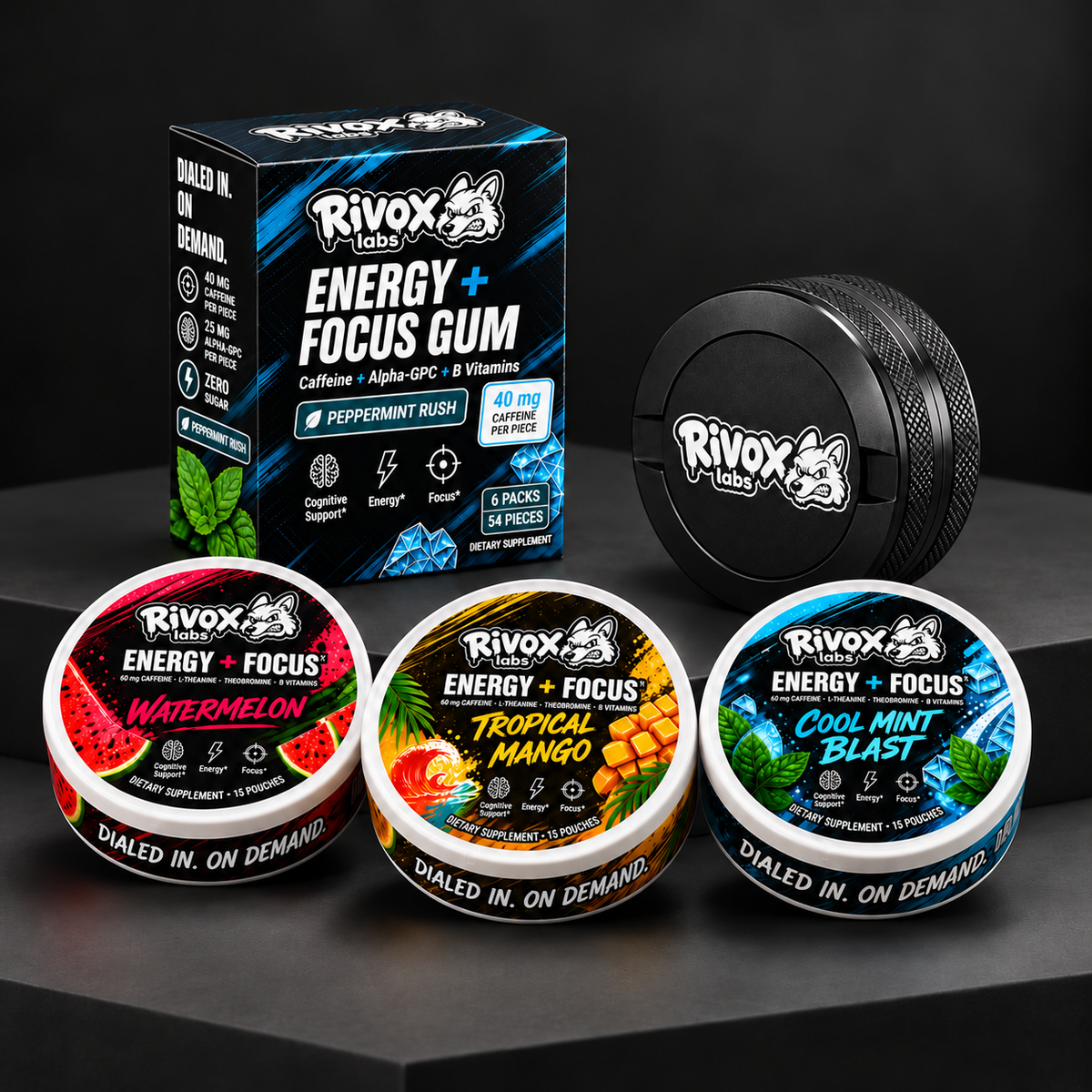
Rivox offers nicotine-free Focus Pouches for adults who like the pouch format and want a portable way to support focus without nicotine. Compared with gum, pouches can be the better fit when you want to keep your hands free or do not want to chew through an entire call. Compare current flavor options, active ingredients, and labeled caffeine information directly on the package before building them into your routine.
3. Coffee, cold brew, or espresso
Coffee is not going anywhere. It is familiar, easy to customize, and genuinely enjoyable when you have time to drink it. A morning coffee can be part of the routine, not just a caffeine delivery system. That matters.
But coffee is not always convenient. It can be hot when you are already running warm, expensive when you are buying it on the road, and awkward when you are moving from the car to the gym to the office. The caffeine amount can also vary widely by drink, size, and shop. A large cold brew is not necessarily a casual choice just because it comes with a lid.
Coffee works best when you have time and want the experience. A pouch or gum can make more sense when the meeting starts in two minutes or you are wedged into seat 22B with no cup holder worth trusting.
4. Energy drinks
Energy drinks are easy to find and often come in a broad range of flavors. They can be useful when you want something cold and ready to drink, especially during a long drive or after a poor night of sleep. They are also bulky, and that is the problem for plenty of people.
A can takes up space, needs to be finished or carried around, and may not suit a situation where you want to be discreet. Ingredient profiles vary a lot, too. Some include sugar, some use sweeteners, and caffeine amounts can range from modest to substantial. The label is the only reliable shortcut here.
If you choose an energy drink, treat it as a deliberate serving rather than background hydration. Keep water in the picture, particularly on travel days or during training. Caffeine is not a substitute for fluids, food, or the sleep you have been dodging since Tuesday.
5. Tea and matcha
Tea and matcha are quieter alternatives for people who want a more measured routine. They are often easier to sip over time than coffee and can feel less intense for those who are sensitive to larger caffeine servings. The downside is portability. Brewing tea at home is easy. Brewing tea while your kid's practice runs late and your phone is at 4 percent is less elegant.
Ready-to-drink tea can solve part of that problem, but then you are back to carrying a bottle or can. It also pays to check sugar and caffeine labels, since the word tea does not automatically mean low sugar or low caffeine.
This category is a good fit for calmer workdays, morning routines, or anyone who prefers a slower ramp. It may be less useful when you need an option that can disappear into a pocket before you head out the door.
6. Caffeine tablets and capsules
Capsules and tablets are compact, straightforward, and usually easy to store. They can make sense if you do not care about flavor and want a format with no chewing, sipping, or pouch placement. For some adults, that is exactly the appeal.
The drawback is that they can feel impersonal and easy to overthink. You do not get the same sensory cue as a coffee or gum, and a tablet is not ideal for everyone, especially if taking supplements is already inconsistent. Read the directions, understand the caffeine amount per serving, and avoid stacking it with other caffeinated products without doing the math.
7. Food, water, and a real reset
This is the least glamorous option, which is probably why it gets skipped. A slump is not always a caffeine problem. Sometimes it is a lunch-that-was-not-really-lunch problem, a dehydration problem, or a sleep problem wearing a fake mustache.
A snack with protein and carbohydrates, water, and five minutes away from the screen can change the next hour more than another hit of caffeine. That does not make portable energy products pointless. It just means they work best as part of an adult routine, not as emergency construction materials for a day with no foundation.
How to choose the right format for your day
Choose gum when you want an active, familiar format and do not mind chewing. Choose a nicotine-free pouch when hands-free and discreet matters more. Choose coffee, tea, or an energy drink when you want a beverage and have time to enjoy it. Choose tablets when flavor and ritual are not part of the equation.
Whatever you choose, pay attention to your timing. Caffeine later in the day may interfere with sleep for some people, and more caffeine is not a medal for being busy. Start with the labeled serving, learn how it fits your personal tolerance, and avoid combining several caffeinated products casually just because the calendar looks rude.
The goal is not to turn every ordinary afternoon into a performance test. It is to keep a practical option nearby for the moments that ask more of you. Pick the format that fits, read the label, and keep your day dialed in on demand.


